
Opening and running a psychotherapy practice in Luxembourg is about more than welcoming patients. It is a project that combines a strict legal framework, administrative requirements, quality listening and day-to-day management. Here is a practical guide based on official rules and the real needs of practitioners.
1. Choose a calming, accessible location
A practice is first and foremost a therapeutic space. The environment should inspire calm: soft colours, comfortable furniture, natural light. In Luxembourg, any place open to the public must meet the accessibility requirements for people with reduced mobility (PRM), with existing buildings to be brought into compliance gradually by 2032 (Guichet.lu).
2. Invest in a professional, functional environment
A psychotherapy practice does not need complex medical technology, but certain conditions are essential:
- Soundproofing to guarantee confidentiality.
- Ergonomic furniture for comfortable sessions.
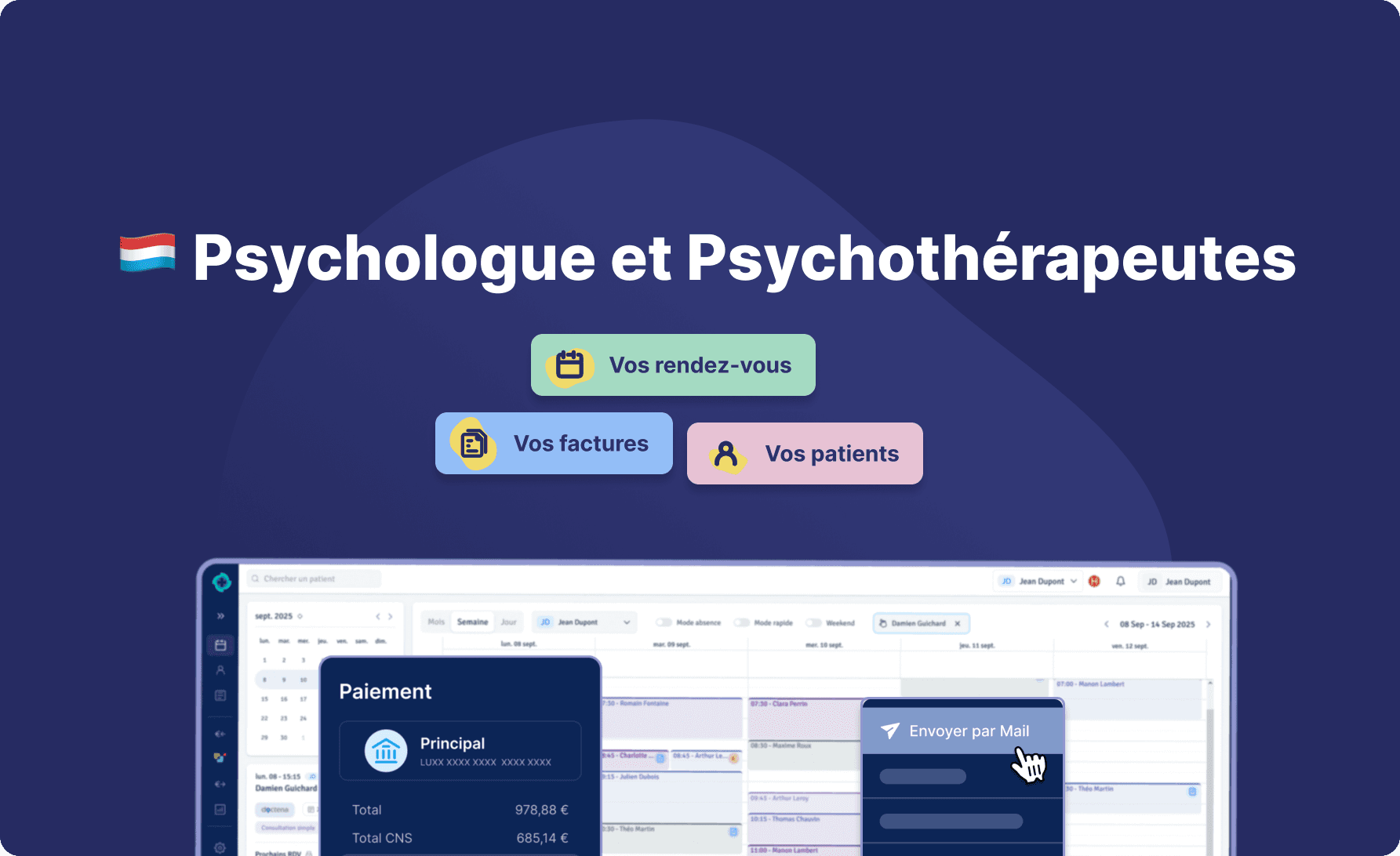
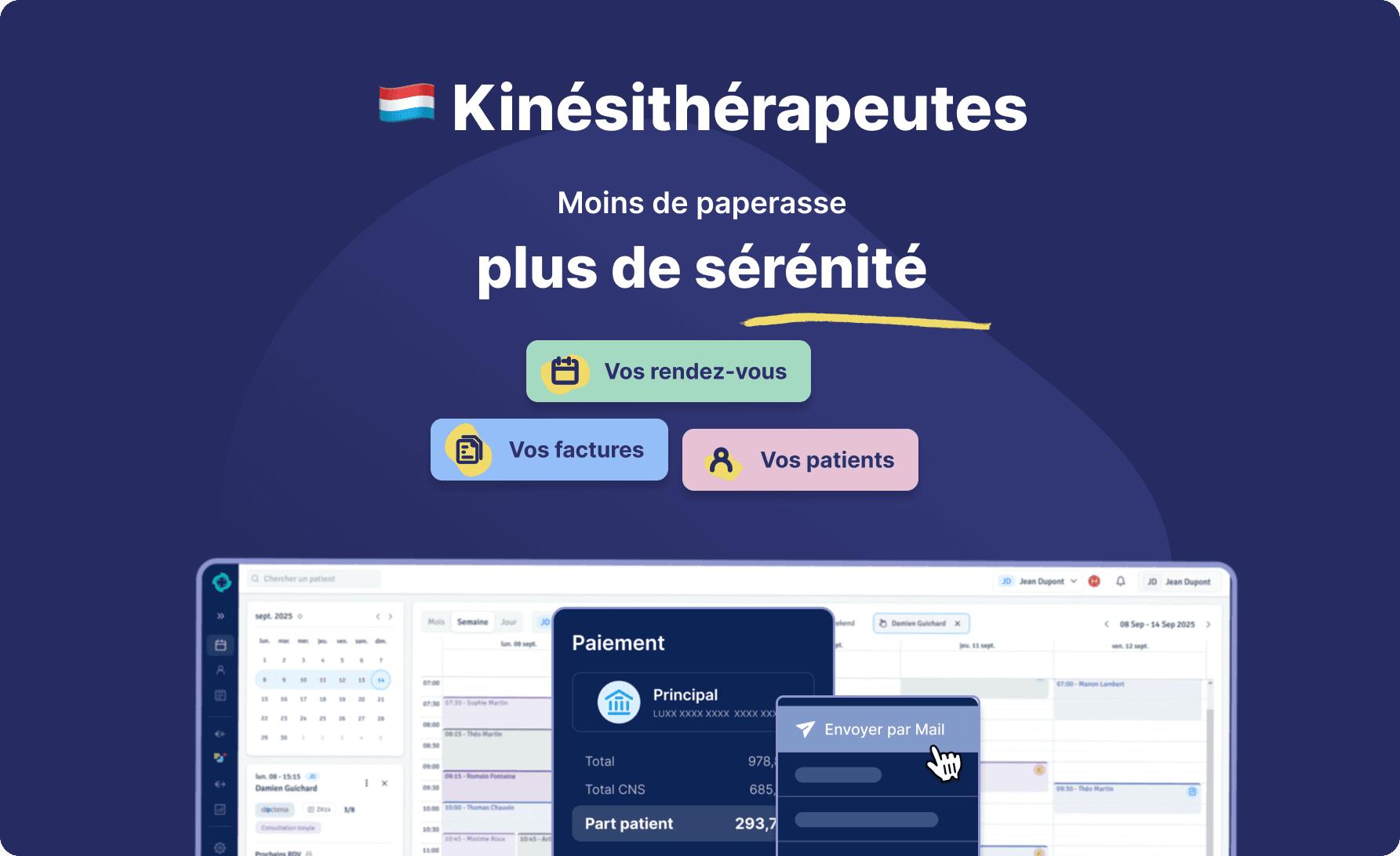
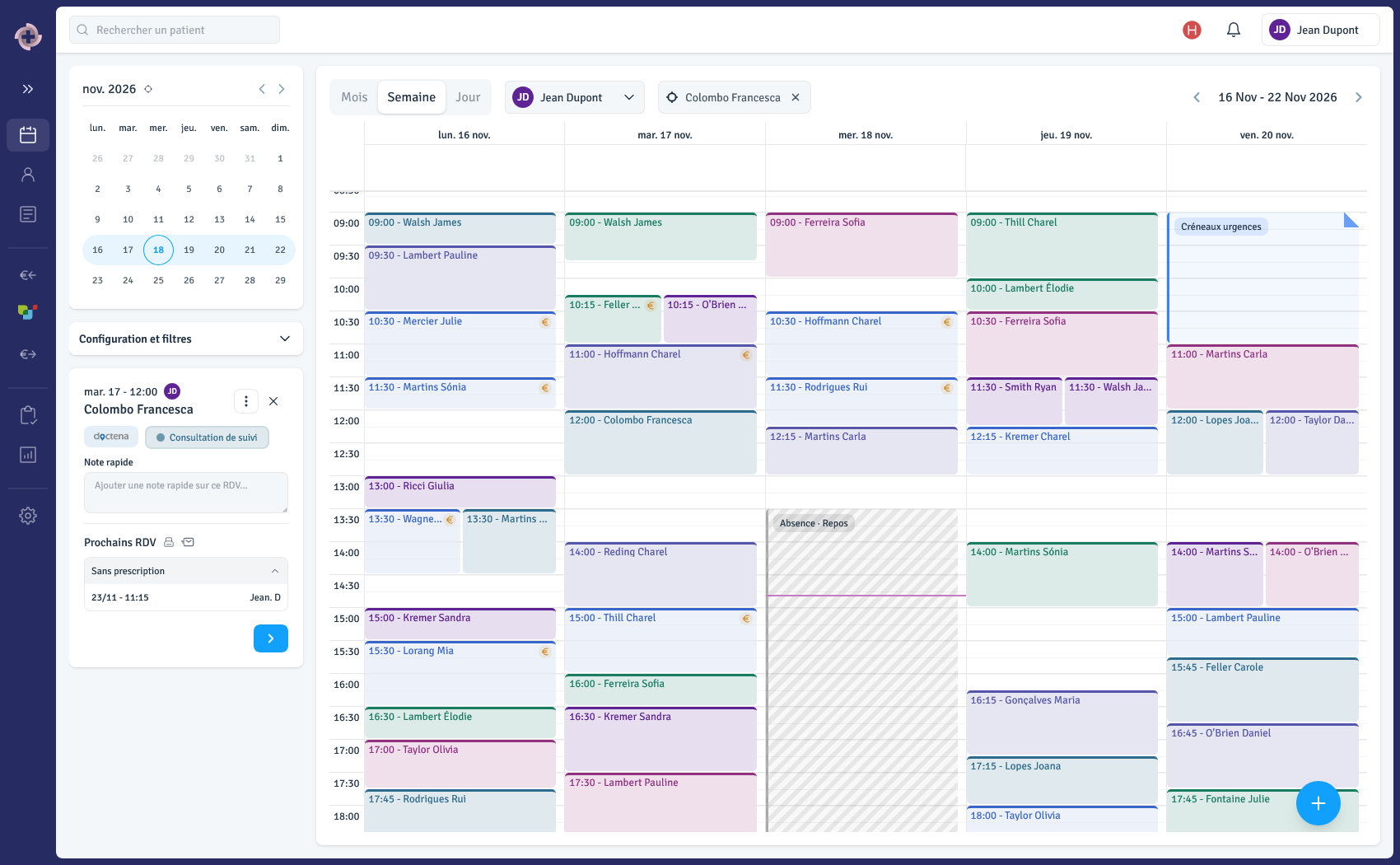
- Secure management software for records, payments and invoicing.
- Compliance with GDPR obligations, under the supervision of the CNPD (CNPD).

3. Make booking simple
Easy access to care starts with how consultations are organised. Offering an online calendar and automatic reminders (email/SMS), and keeping slots free for emergencies or close follow-up, reduces no-shows and improves the quality of follow-up.
4. Build a strong therapeutic relationship
Trust is at the heart of psychotherapy. It is recommended to:
- Clarify from the outset the approach you use (CBT, EMDR, psychoanalysis, systemic therapy…).
- Set a clear framework (duration, frequency, ground rules).
- Create a climate of emotional safety and kindness. Note: in Luxembourg, psychotherapy is a regulated health profession (law of 14 July 2015) and may only be practised by a professional authorised by the Ministry of Health (Guichet.lu).
5. Guarantee confidentiality and data security
Professional secrecy is a legal obligation.
Records must be protected both physically and digitally.
The software you use must be GDPR-compliant.
For remote consultations, use secure platforms. Note, however, that at present video psychotherapy sessions are not reimbursed by the CNS (CNS).
6. Keep learning
Psychotherapeutic practice keeps evolving: new approaches, clinical research, legal changes. Taking part in supervision, conferences and continuing education remains a moral obligation and an asset for staying up to date.
7. Build your online visibility
Most patients now find their practitioner online. A clear, professional website detailing your specialties, fees, reimbursement terms (CNS) and therapeutic approach inspires trust. Positive reviews and good local search rankings are powerful ways to attract patients.
8. Work with other healthcare professionals
Psychotherapy is not practised in isolation. Working with GPs, psychiatrists, schools or associations allows for better overall care. In addition, a medical prescription is mandatory for CNS reimbursement (beyond the initial assessment sessions) (CNS).
9. Be transparent about fees and reimbursements
In Luxembourg, since February 2023:
- A standard session (50–60 min) is set at €144 (coefficient 1).
- CNS coverage: 70% for adults, 100% for minors < 18 years (with a medical prescription).
- Psychologists (not recognised as psychotherapists by the M3S) are not reimbursed by the CNS. (RTL Info, CNS)
- Informing patients clearly about costs, payment methods and cancellation terms avoids any ambiguity.
10. Monitor your activity and take care of yourself
Analysing your activity (number of consultations, common reasons for consultation, no-show rate) helps you improve your organisation and anticipate needs. Above all, a good psychotherapist must protect their own well-being: regular supervision, exchanges with peers, breaks and a healthy lifestyle.