
The income of a psychotherapist in Luxembourg depends mainly on:
- experience,
- the number of sessions per week,
- status (self-employed, employed, associate),
- the share of sessions reimbursed by the CNS,
- the location of the practice.
Our estimates are based on official CNS rates, public data and feedback from psychotherapists practising in Luxembourg.
Official rate for a psychotherapy session (CNS)
Since the psychotherapy reform in Luxembourg, the CNS has set a single rate for reimbursable sessions:
Psychotherapy session (SP01, SP02, SP03): 👉 €158.95 per session
CNS reimbursement:
- 70% for adults
- 100% for under-18s
For an adult, this means:
- Total price: €158.95
- Patient's out-of-pocket share: about €47.68
- Share reimbursed by the CNS: €111.27
Estimated gross turnover
Based on the CNS rate (€158.95 / session):
Early career (building up the calendar)
- 15 to 20 sessions / week
- Annual gross turnover: €114,000 to €158,000
Established psychotherapist at cruising speed
- 20 to 30 sessions / week
- Annual gross turnover: €158,000 to €238,000
Highly sought-after psychotherapist / well-established practice
- 30 to 35 sessions / week
- Annual gross turnover: up to €280,000 gross/year
These figures are calculated on the basis of 48 working weeks per year.

From gross to net: how much is really left?
This is where many therapists ask themselves the real question.
As a self-employed professional in Luxembourg, on average you can expect the following:
1. Professional expenses
For a psychotherapist with their own practice:
- Practice rent
- Professional liability insurance
- Software / management tools
- Equipment
- Bank fees / accounting
- Communication / website
👉 On average: 15% to 30% of turnover
2. Social security contributions (CCSS)
Social security contributions for the self-employed in Luxembourg generally range between:
20% and 25% of taxable income
This covers:
- Pension insurance
- Health insurance
- Long-term care insurance
3. Income tax
After contributions, income is still subject to income tax. Depending on your tax bracket, family situation and deductions:
👉 On average: 15% to 30% of the remaining income.
A clear example: gross → net simulation
Let's take a psychotherapist with:
Annual gross turnover: €180,000
Calculation steps
- Professional expenses (25%) €180,000 → €135,000
- Social security contributions (22%) €135,000 → €105,300
- Income tax (20%) €105,300 → €84,240 net/year
Clear summary in %:
Starting from gross turnover:
- Professional expenses: ~25%
- Social security contributions: ~22%
- Taxes: ~20%
👉 This means that on average: ✅ A self-employed psychotherapist keeps around 45% to 55% of their gross turnover as actual net income.
Monthly example
For €180,000 gross/year:
Net ≈ €84,000 / year
That is ≈ €7,000 net per month
Psychotherapists working as associates
If you work in a practice as an associate:
You pay a retrocession (a share of your fees) to the practice
Typically: 20% to 40% of turnover
But you have fewer expenses (no rent, no secretary, etc.).
Example:
On €180,000 gross turnover:
30% retrocession → €126,000
Then contributions + taxes 👉 The final net income can be around €60,000 to €80,000 per year, depending on the case.
Factors that influence income
- Number of sessions per week
- Calendar occupancy rate
- Geographic area
- Reputation and seniority
- Share of CNS vs private sessions
- Level of fixed costs
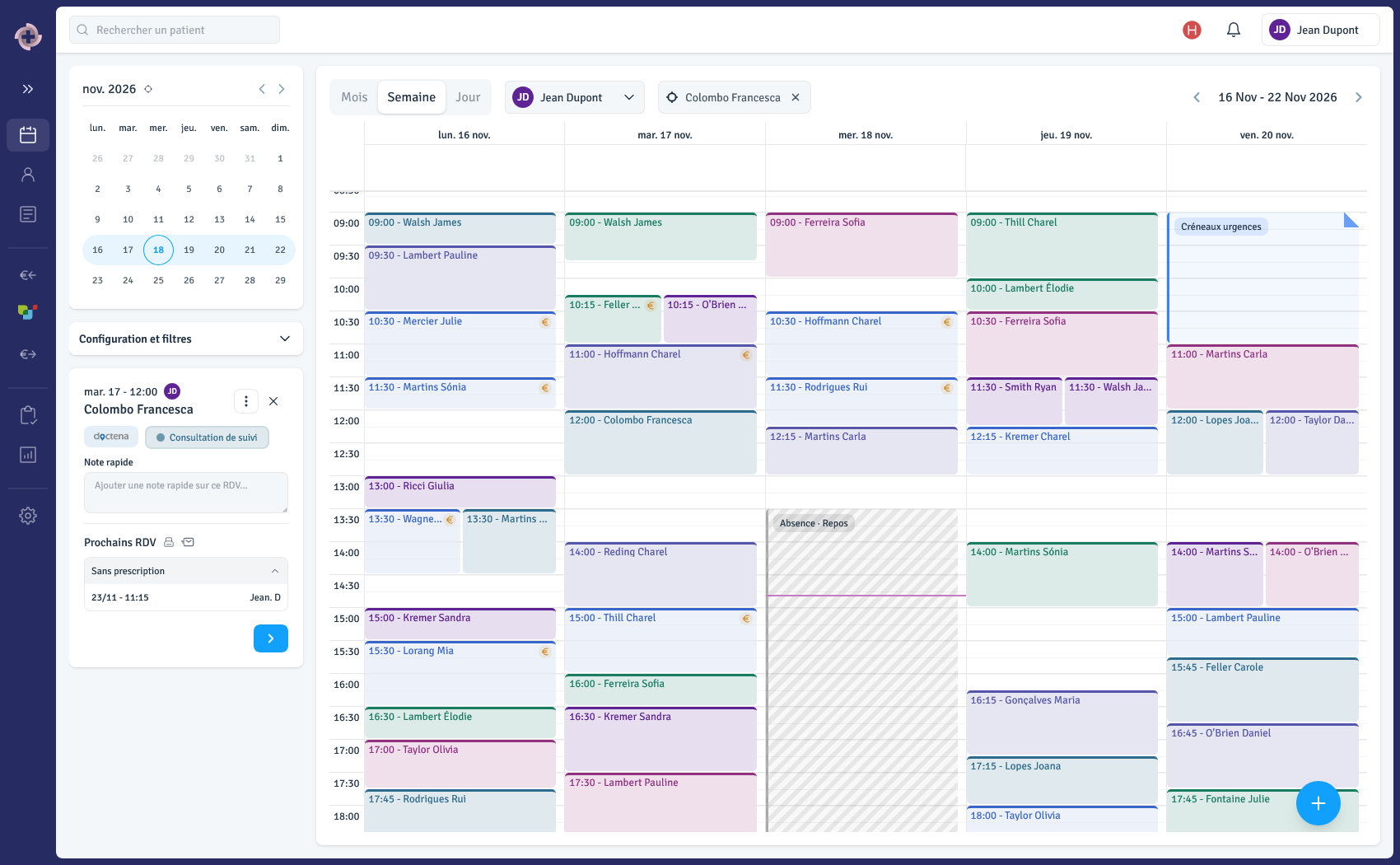
Boost your profitability with software like Logicare
Administrative management takes up a lot of non-billable time for a psychotherapist: billing, payment tracking, reminders, patient records…
Software like Logicare lets you:
- Automate billing
- Manage patient records
- Track payments and unpaid invoices
- Reduce admin time
👉 Less time wasted = more time for patients = more potential turnover.
But above all: 👉 Better management helps you reduce administrative errors, improve cash flow, and therefore increase your real net income, without increasing your workload.
Conclusion
Working as a psychotherapist in Luxembourg can be financially very attractive in 2025, particularly thanks to the framework set by the CNS.
However, gross turnover does not reflect your real salary. Between expenses, social security contributions and taxes, the key takeaway is that a self-employed psychotherapist keeps on average 45% to 55% of their gross turnover as actual net income.
Optimised management, particularly with a tool like Logicare, helps you save time, reduce financial losses and maximise your income over the long term.