
Setting up as a podiatrist in Luxembourg is an attractive opportunity, but it requires you to complete several administrative, legal and technical steps. The profession is regulated: you need an authorisation to practise and an approval (agrément) to work within the national reimbursement scheme. This guide walks you through the essential steps, with the official references.
1. Check diploma recognition and the required qualifications
There is no initial training programme in podiatry in Luxembourg: most podiatrists come from Belgium, France or other countries where a degree course exists. You therefore need to have your diploma recognised by the Luxembourg authorities before taking any steps to practise.
Professional recognition, the authorisation application and the procedure depend on the type and level of the diploma (higher education vs. secondary-level qualification); information and forms are available from the relevant government services. MengStudien+1
2. Obtain your authorisation to practise (Ministry of Health)
The authorisation to practise for regulated healthcare professions is issued by the Ministry of Health and Social Security. You apply through the online services (MyGuichet.lu) or with the forms available from the ministry. Without this authorisation, you are not allowed to practise as a podiatrist.

3. Apply for CNS approval (provider code)
To bill and allow your patients to be reimbursed, you must obtain approval from the Caisse Nationale de Santé (CNS) and receive a provider code. The CNS page dedicated to podiatrists details the approval requirements, the documents to provide and the billing/reimbursement procedures. CNS+1
In practice, the CNS generally asks for: a practice information form, a copy of the ministerial authorisation, an identity document, bank details (RIB) and other up-to-date administrative documents (check the CNS page for the exact list and how to submit them).
4. Legal status, registration and social security affiliation
To practise as a self-employed professional, you need to choose a legal status (sole trader, company, etc.), register your business and join the social security system for the self-employed (affiliation with the Centre Commun de la Sécurité Sociale — CCSS). Business creation and affiliation formalities are handled via Guichet.lu / CCSS.
5. Professional liability insurance
Healthcare professions fall into the category of regulated professions. It is strongly recommended, and often contractually required by the CNS or by some employers/landlords, to take out professional liability insurance (RC Pro) covering the care you provide. Check the exact requirements for podiatry and ask for an insurance certificate before opening. Luxembourg Assurance+1
6. Premises and hygiene / safety compliance
Your premises must meet the hygiene and safety standards that apply to healthcare professions: accessibility (separate entrance, circulation), technical characteristics of the premises, hygiene procedures (sterilisation, medical waste management), and compliant equipment and surfaces. Grand-ducal rules and regulations set out these requirements; consult the Health Code (Code de la santé) and the regulation on hygiene conditions. Legilux+1
7. Equipment and practice organisation
Your equipment (suitable treatment chair, sterilisable instruments, materials for orthopaedic insoles, disinfection devices) must meet medical standards; put written protocols in place for sterilisation and the handling of reusable instruments.
Set up waste management in line with the regulations (infectious clinical waste) and a traceability plan for sterilisation.
8. Reimbursements, pricing and billing
With your CNS provider code, you can submit invoices for reimbursable procedures. The terms (coverage rates, procedures covered, agreed fees) are set by the CNS and by the agreements between the CNS and the professional federations. Check the nomenclature of covered procedures and any protocols/agreements currently in force. CNS+1
Rigorous billing management (submission through the required channels, payment tracking, handling of rejections) is crucial for your cash flow.
9. Languages and communication
Luxembourg is multilingual: French is generally enough for dealing with patients, but knowing German, Luxembourgish and English is an asset for an international patient base. Create a clear patient information sheet, a locally optimised website and appointment booking channels (phone / online platform).

10. Streamline practice management with the right software
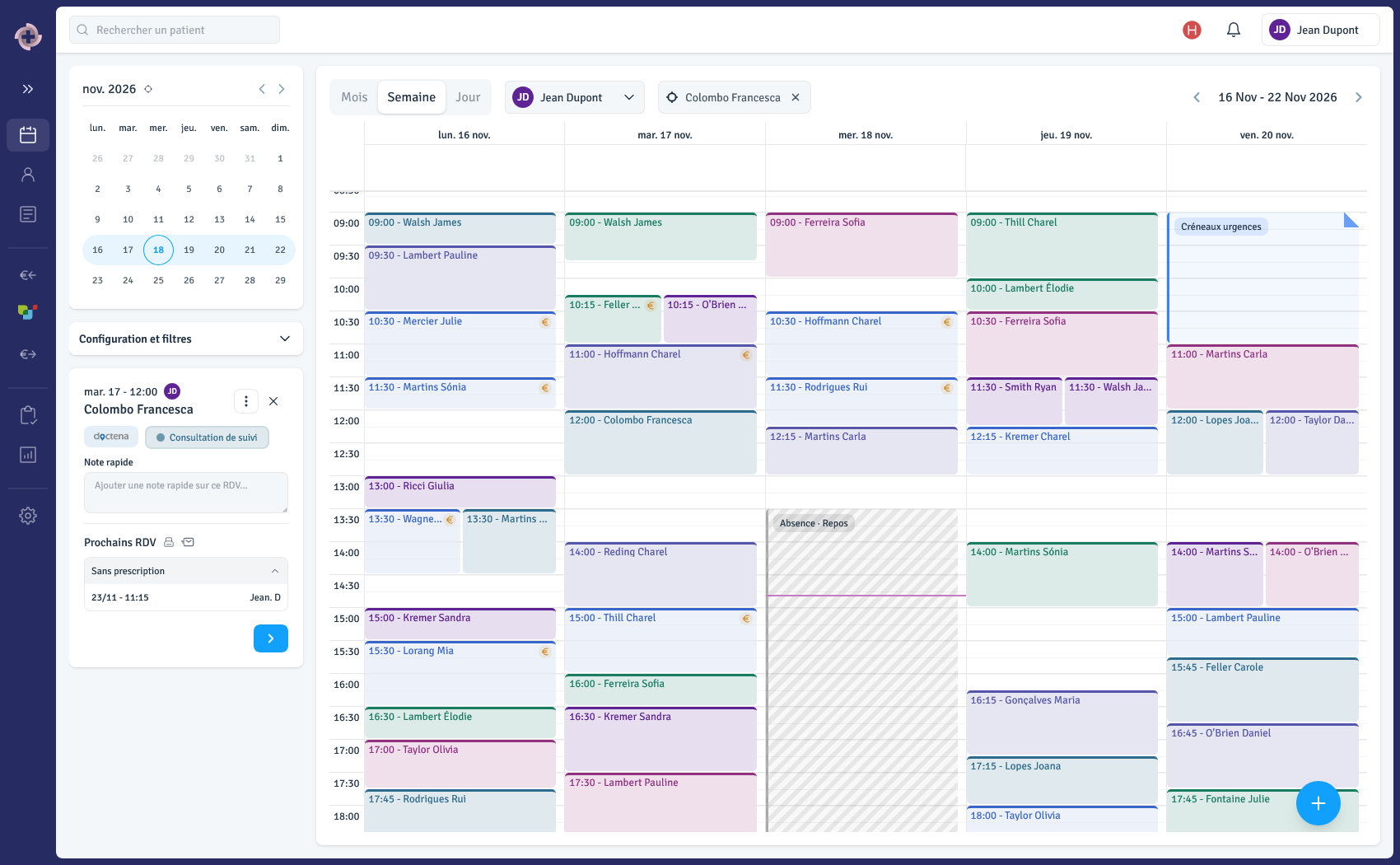
Setting up as a podiatrist in Luxembourg means not only completing the administrative steps (authorisation to practise, CNS approval, social security affiliation), but also ensuring smooth, professional day-to-day management. The right software is an essential asset to:
Manage patients efficiently: online appointment booking, automatic reminders, organised patient records.
Ensure administrative compliance: tracking of billed procedures, compliance with quotas and document traceability.
Save time: fewer repetitive tasks, more time available for patient care.
Logicare, designed for healthcare professions in Luxembourg, supports podiatrists through all these steps. It lets you centralise appointments, billing and administrative management in an intuitive interface that complies with local standards.
By adopting this kind of tool from the start, you secure your income, improve the patient experience and free up time to focus on what matters most: patient care.
Conclusion
Key points / quick checklist
- Have your diploma recognised and/or obtain your authorisation to practise.
- Obtain CNS approval and your provider code.
- Register your business, join the CCSS and choose a suitable legal status.
- Take out appropriate professional liability (RC Pro) insurance.
- Fit out premises that comply with hygiene rules and grand-ducal regulations.