
Every year, more and more French physiotherapists are setting their sights on Luxembourg.
For many, the goal is simple: to do the same job, but in a more favourable environment.
More attractive earnings, strong demand for care and new opportunities for self-employed practitioners… Luxembourg draws many healthcare professionals looking to give their career fresh momentum.
But why are so many physiotherapists choosing to cross the border?
A more favourable economic environment for physiotherapists
The first reason is, of course, financial.
In France, many self-employed physiotherapists face the same difficulties: regulated fees, heavy overheads and a large share of their time spent on administration.
Over the years, some professionals feel they have hit a ceiling. To increase their income, they often have to take on more patients or work longer hours.
In Luxembourg, the context is different. The Luxembourg healthcare system, with coverage by the CNS, allows self-employed physiotherapists to build a profitable practice with a steady patient base.
For many French practitioners, the question therefore comes naturally: why not do the same job in a country where the conditions are more advantageous?
Luxembourg needs new physiotherapists
Luxembourg has been experiencing strong population growth for several years. More residents also means greater need for care. This trend is creating many opportunities for healthcare professionals, physiotherapists in particular.
Between 2013 and 2023, the number of practising physiotherapists in Luxembourg rose by 91%. This growth reflects a simple reality: the country continues to attract practitioners and demand remains high.
For a French physiotherapist, this is an opportunity to build a practice quickly, whether by joining an existing practice or opening their own.
Going self-employed in Luxembourg: a real opportunity
Many French physiotherapists are not just coming for better pay. They are also looking for a different way of practising their profession.
Being self-employed lets you organise your day better, choose your own pace of work and build a longer-lasting relationship with your patients.
But opening your own practice also means becoming a manager. Between appointments, patient records, CNS billing and all the administrative tasks, day-to-day management can quickly take up a lot of room.
That is often when some practitioners realise that a profitable practice depends not only on the number of patients, but also on how well it is organised.

What are the steps to practise as a physiotherapist in Luxembourg?
A physiotherapist who qualified in France must go through several steps before being able to practise in Luxembourg. In particular, they must have their professional qualifications recognised and obtain an authorisation to practise.
Even though these steps take a little preparation, French professionals already have a strong presence in the Luxembourg healthcare system. The proximity of the two countries and the recognition of training naturally make it easier to set up.
The challenge after setting up: running your practice efficiently
Moving to another country does not make the paperwork go away. On the contrary, you have to learn a new way of working: new billing rules, new habits and a new organisation.
Many physiotherapists quickly discover that time spent in front of a computer can become a real obstacle to growing their practice. That is why many professionals now choose tools tailored to their work.
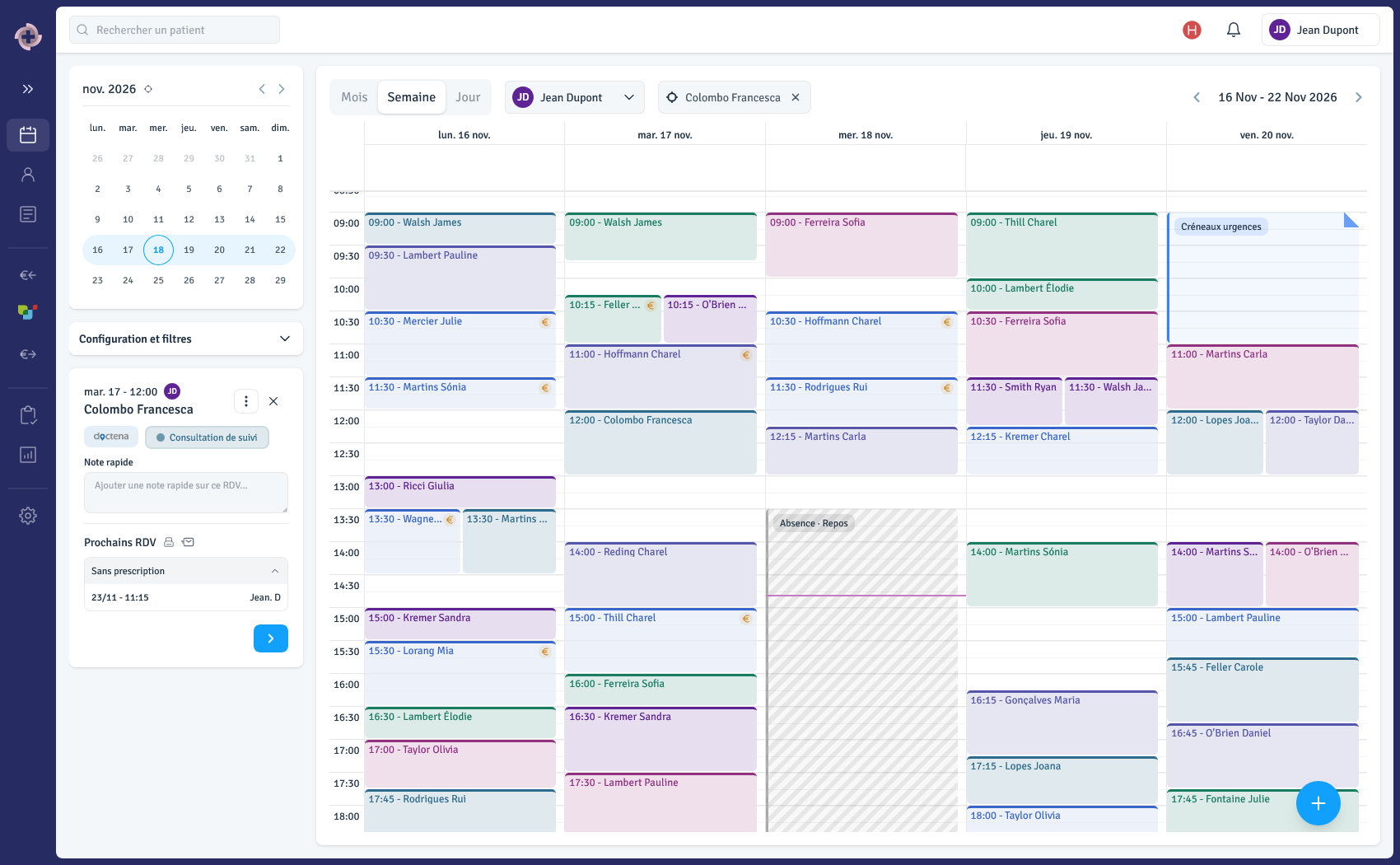
With Logicare, physiotherapists can centralise their calendar, patient records and CNS billing on a single platform. The goal is simple: spend less time on admin and more time with their patients.
So, should you become a physiotherapist in Luxembourg?
For many French physiotherapists, the answer is yes. Luxembourg offers a dynamic market, opportunities for self-employed practitioners and a favourable environment for building a sustainable practice.
But setting up successfully takes more than a diploma. You also need good organisation and the right tools to run your practice day to day.
Because a high-performing practice is not just one with lots of patients. It is one where every working hour is used efficiently.