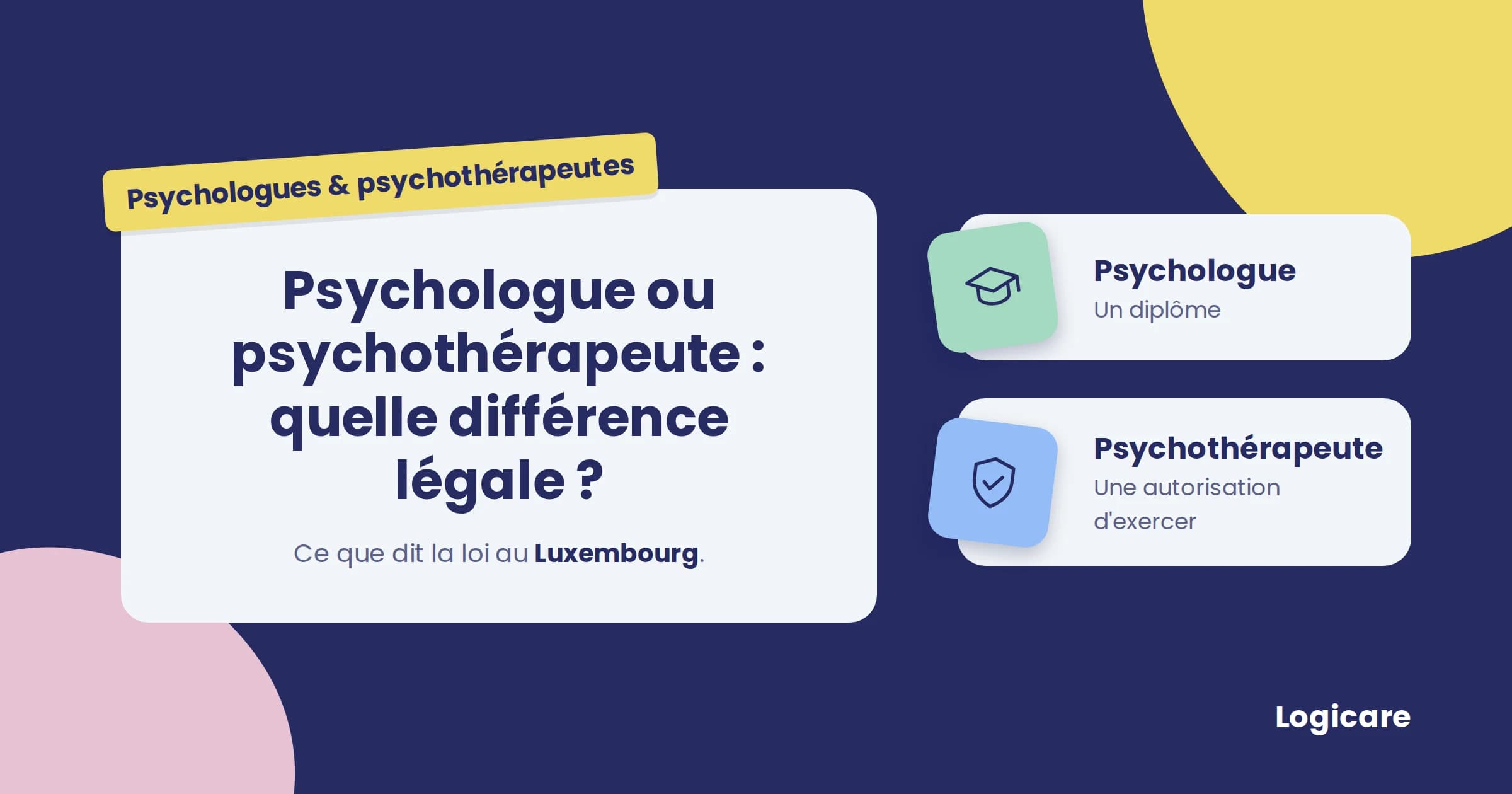
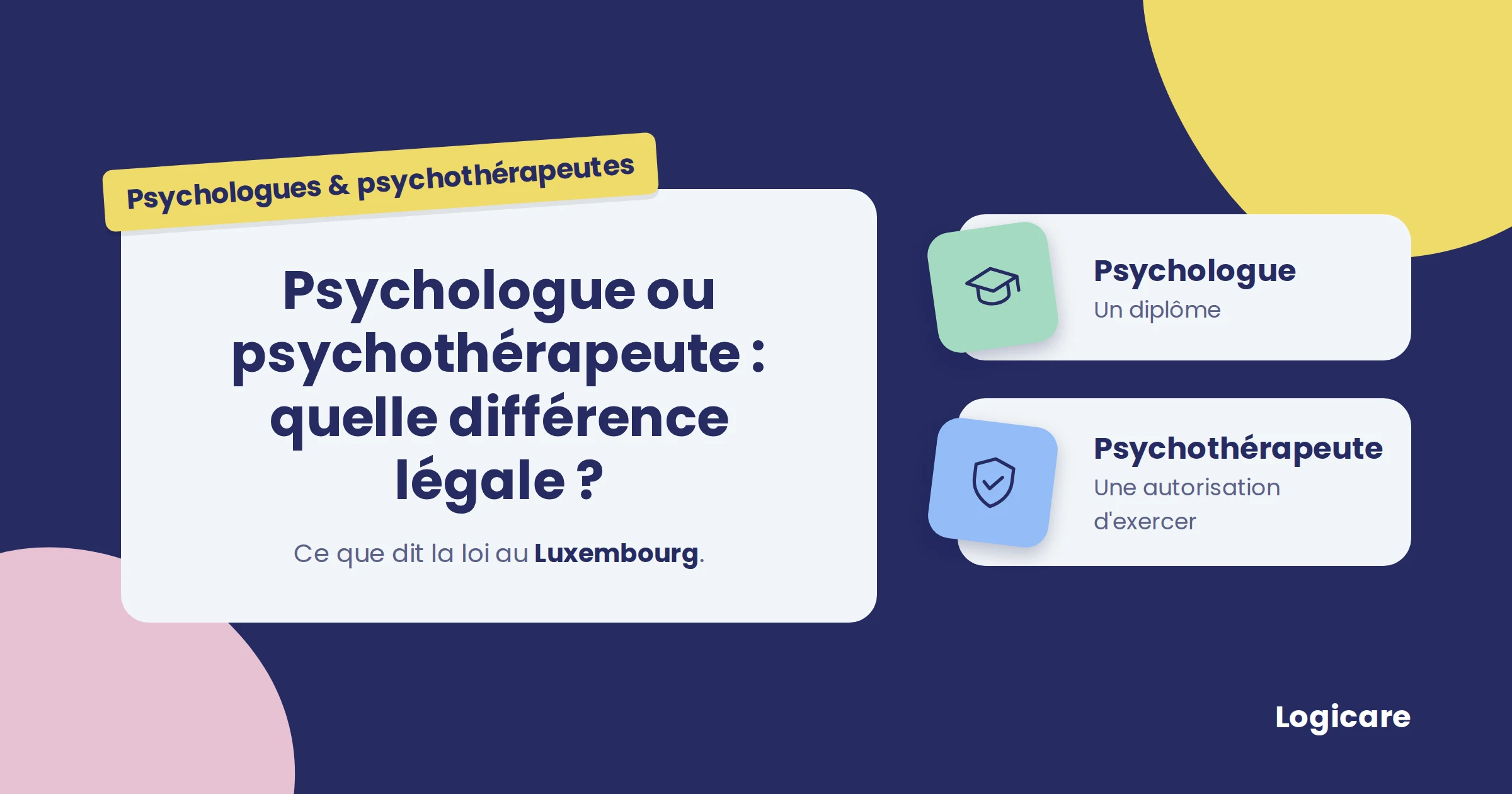
In Luxembourg, patients (and sometimes professionals themselves) often confuse psychologists and psychotherapists. Yet the difference is not just a matter of vocabulary: one is a regulated healthcare profession, the other is not yet.
This distinction has very concrete consequences: who may use the title, who needs an authorisation to practise, and above all which sessions are reimbursed by the CNS. Here is an overview, backed by the official texts.
The psychologist: a degree, not (yet) a regulated profession
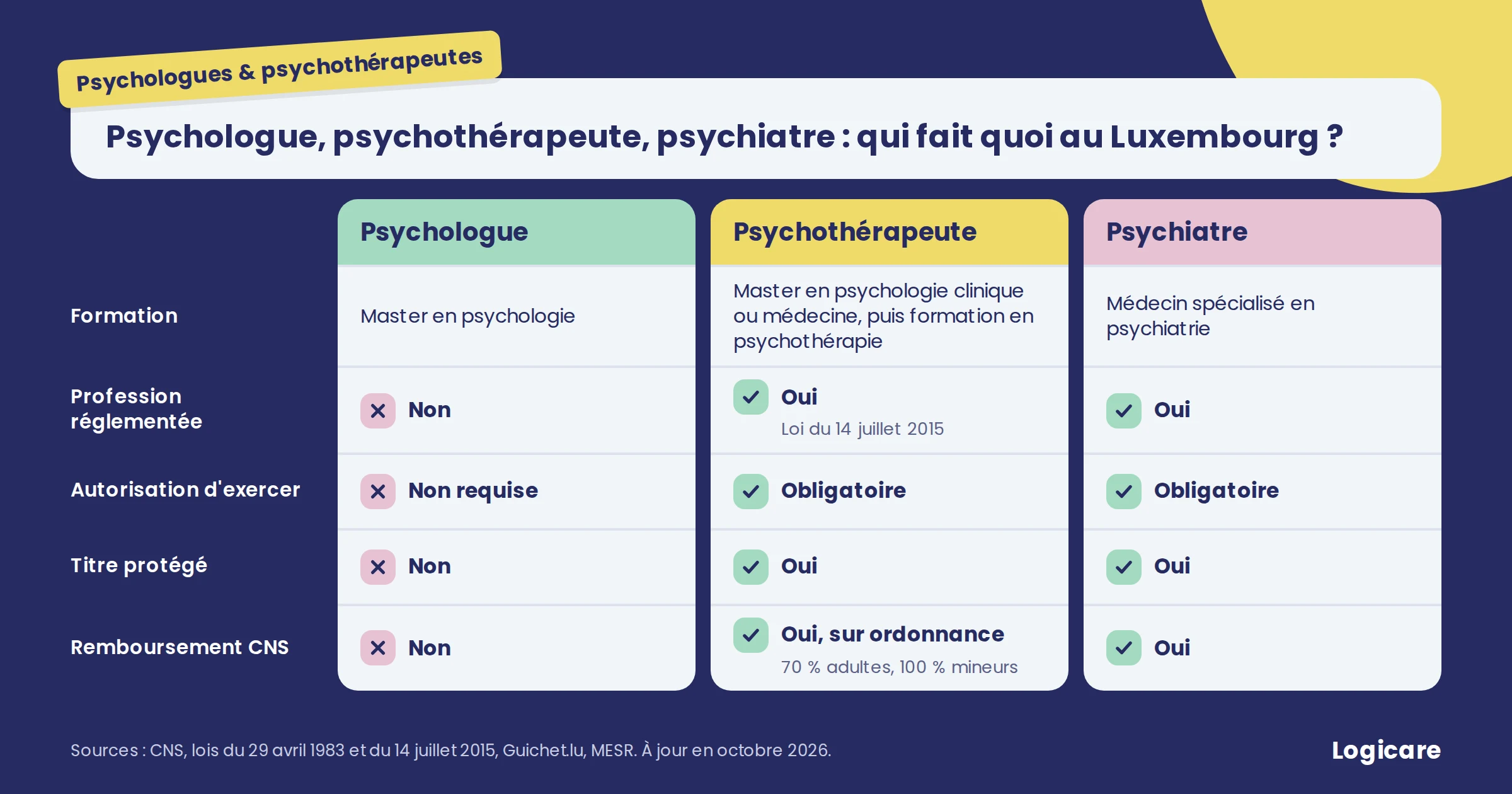
According to the CNS, a psychologist is a professional who holds a university degree in psychology, usually at master's level. Psychologists work in a wide range of fields: assessment, counselling, psychological support, research or training.
The official MengStudien.lu portal (Ministry of Research and Higher Education) is clear: the psychologist profession is not regulated in Luxembourg. There is therefore no authorisation to practise issued by the Ministry of Health for psychologists, unlike for psychotherapists.
If you obtained your degree abroad, registration in the register of qualifications (registre des titres de formation) held by the MESR is still strongly recommended:
- Mandatory in the public sector (State, municipalities).
- Increasingly requested by private employers when hiring.
- Not necessary for certain Belgian, Dutch or Baltic degrees, which are automatically recognised under the Benelux agreements.
The psychotherapist: a healthcare profession governed by law
A psychotherapist is a psychologist or a doctor who has completed additional training in psychotherapy. Since the law of 14 July 2015 creating the profession, it has been a healthcare profession in its own right.
Practising psychotherapy is subject to an authorisation issued by the Ministry of Health and Social Security, after consultation of the Collège médical. To obtain it, you must meet requirements relating to training, good character and integrity, as well as physical and mental health.
Only an authorised person may use the professional title of psychotherapist. Only an authorised psychotherapist and a medical specialist in psychiatry (or neuropsychiatry, or child psychiatry) authorised to use a training title in psychotherapy may practise psychotherapy as their main activity. No one else may use this title. Practising without authorisation is a punishable offence.
Training requirements
- Basic training: a master's in clinical psychology or medical training.
- Specialised training in psychotherapy, for example the Master in Psychotherapy at the University of Luxembourg.
- For a foreign degree: recognition of professional qualifications by the MESR before applying for authorisation.
CNS reimbursement: what it means for your patients
This is the question your patients ask you most often. The CNS answer is unambiguous: it does not reimburse sessions with a psychologist, but it does reimburse psychotherapy provided by an authorised psychotherapist.
Conditions for coverage:
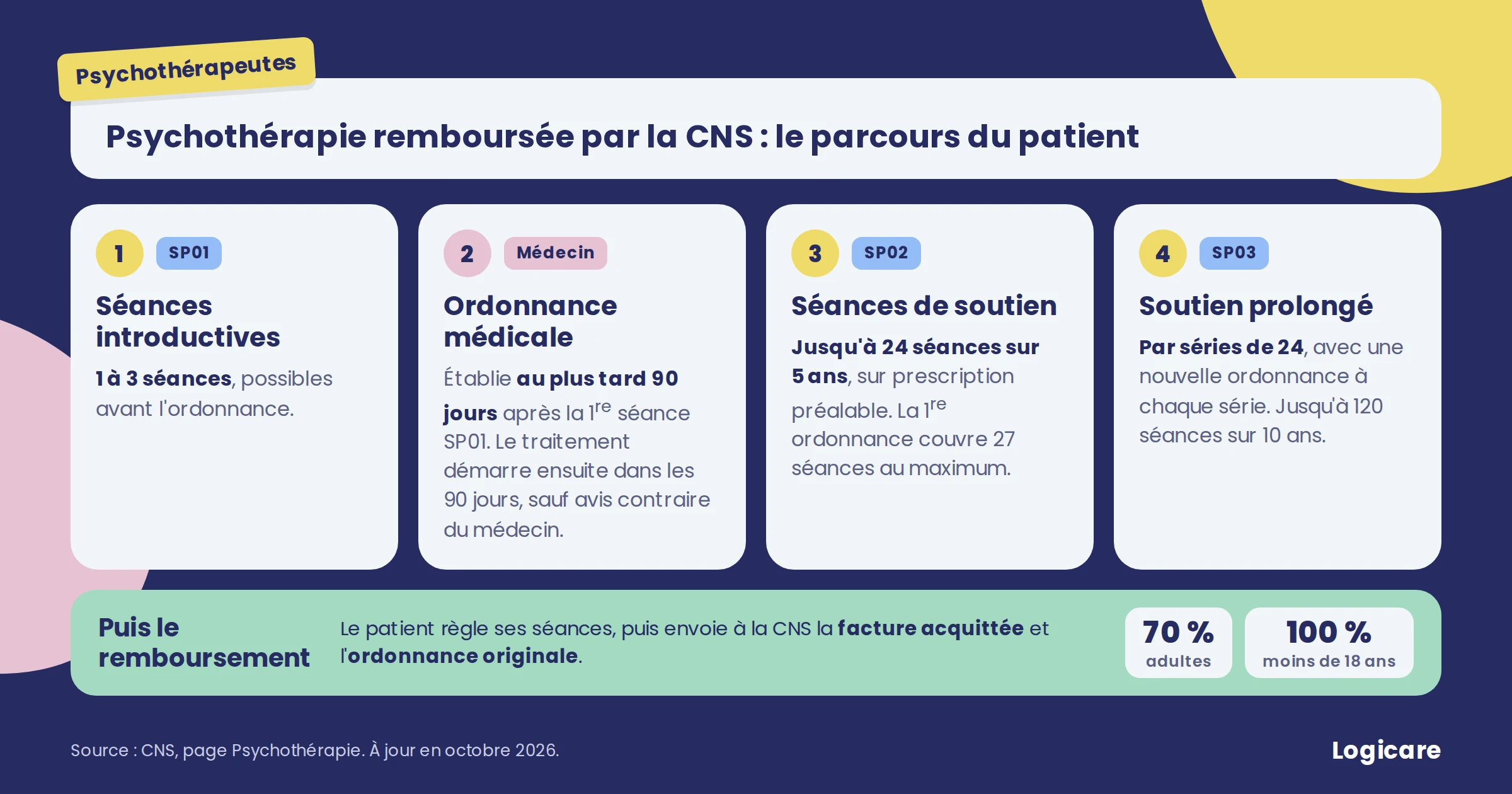
- A medical prescription: the doctor certifies that there is no contraindication and that psychotherapy is appropriate.
- Some flexibility at the start: 1 to 3 introductory psychotherapy sessions (SP01) may take place before the prescription, provided it is issued within 90 days of the first session. Support sessions (SP02) and extended support sessions (SP03), on the other hand, require a prior prescription.
- A 70% rate for adults and 100% for patients under 18 on the date of the prescription.
- A CNS provider code for the psychotherapist, which is essential for the sessions to be covered.
- Reimbursement after the fact: the patient pays for the session, then claims reimbursement from the CNS with the receipted invoice and the original prescription.
- Session caps: the first prescription covers a maximum of 27 sessions (3 SP01 + 24 SP02). After that, each series of 24 extended support sessions (SP03) requires a new prescription.
Frequently asked questions
- Can a psychologist present themselves as a psychotherapist?
No. The title of psychotherapist is protected: you must hold the authorisation to practise from the Ministry of Health. A psychologist without this authorisation may neither use the title nor practise psychotherapy as their main activity.
- Are sessions with a psychologist reimbursed?
Not by the CNS. Some supplementary insurance schemes may cover them under their own terms.
- Do you need a prescription to see a psychotherapist?
Not to see one, but yes to be reimbursed. The first 1 to 3 introductory sessions may take place before the prescription, as long as it is issued within 90 days; subsequent sessions must be prescribed in advance, and treatment must start within 90 days of the prescription.
- Is a psychiatrist also a psychotherapist?
Not automatically. A psychiatrist is a medical specialist who can prescribe medication. They become a psychotherapist if they have completed additional training in psychotherapy.
- Are teleconsultation sessions reimbursed?
No. The CNS does not cover psychotherapy delivered by teleconsultation, whether in Luxembourg or abroad: it is not included in the psychotherapists' nomenclature.
Using good software (e.g. Logicare): why it helps
Whether you are a psychologist or a psychotherapist, the right software saves you time on admin and secures your billing, especially for procedures covered by the CNS.
With Logicare you get:
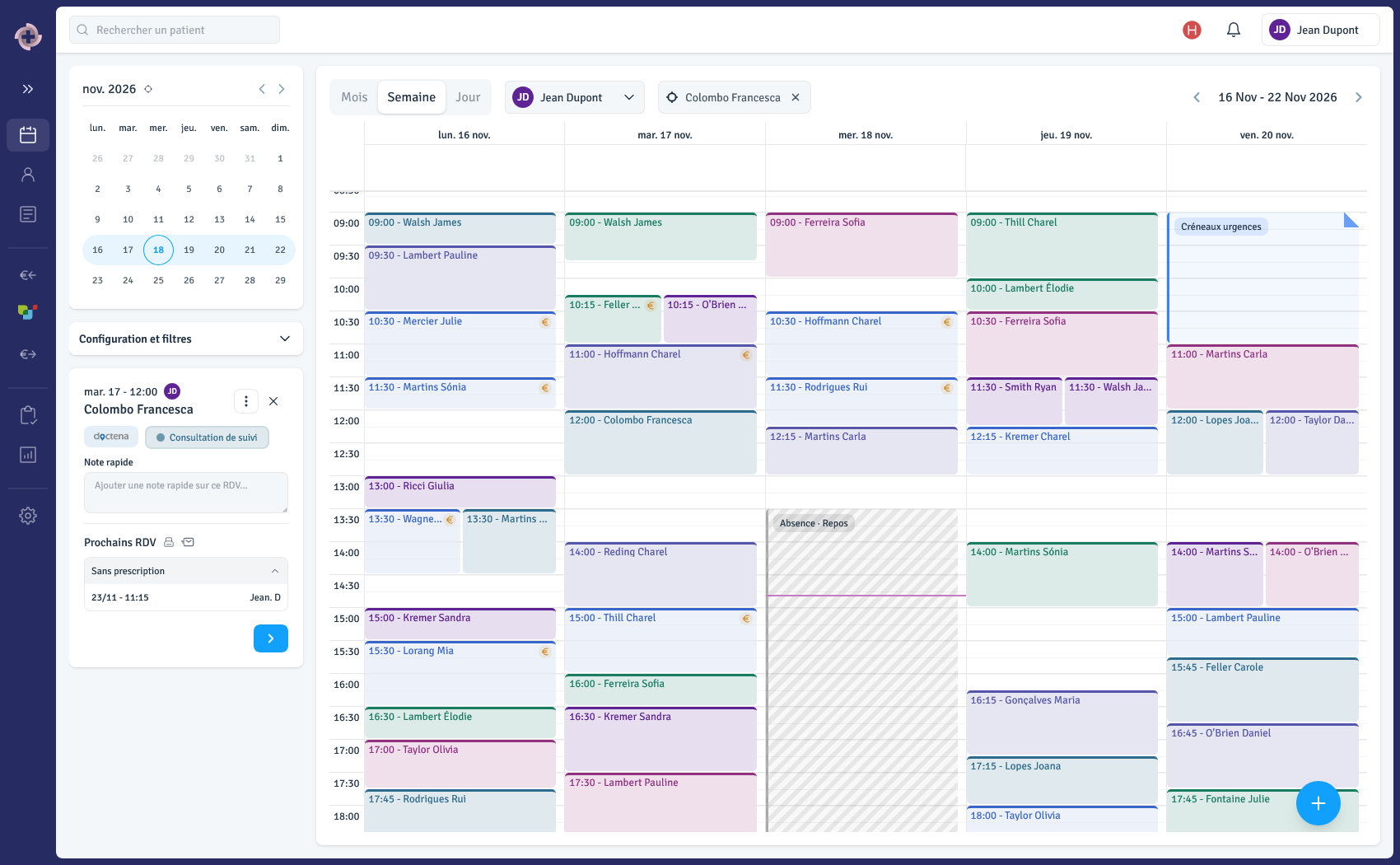
- A calendar synced with Doctena or Mobminder
- Secure patient records and note-taking, exportable to PDF
- Compliant invoice generation, customised for your practice
- Unpaid invoice management and reminders
- A dashboard of your performance
And many more features to discover at logicare.lu/en/pro/psychotherapist and logicare.lu/en/pro/psychologist.